Forced Marriage is the name of the process that forces a person to marry a certain another by exercising various forms of emotional, psychological or physical suppressions. Although the term is used to describe female or male victims, but commonly, females are the victims or involuntary spouses. The Human Rights charter by the United Nations; condemns this practice, as marriage should express freedom and autonomy of any individual. History tells that “Forced Marriage” was a custom in Europe till Nineteenth century, which ended by loud rejection from Catholic Church as grounds for annulment.
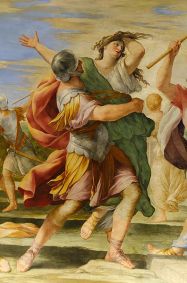 Historically, “Marriage by Capture” was practiced in ancient cultures throughout the Mediterranean area. It is represented in mythology and history, and interpreted in many paintings and illustrations. The practice was not only a product of war captivity or a plotted abduction, but sometimes was elopement or conspired by the bride’s family..!! Some early roles in Rome had annulled Forced-Marriages and punished the bride if consented while in captivity..!! Historically, most of the Balkan had known the Marriage-by-Capture, which paved the sores of mutual forcible ethnic cleansing in the last four centuries.
As a matter of fact, the Muslim communities are currently known for practicing many forms of Forced Marriages; due to complex social and economic reasons. The demise between Forced and Arranged Marriages is very indistinct, and subject to wide debates, particularly in UK and Indian Subcontinent. Therefore, in this paper Arranged-Marriage will be considered as Forced-Marriage, as usually associated with some sort of suppression.
The common types of Forced Marriages
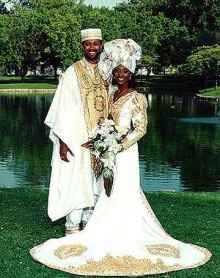 The softest form of Forced-Marriage was known among many oriental societies in the Old World; which is practiced among the cousins, even prior to their berth. However, we cannot fully condemn the practice of “Cousin-Marriage”, as during the grow-up years, both female and male are inspired by the family verdict, and build up their emotional closeness and attachment. Most cases of this type of marriage were and still successful; however it is not recommended for its vulnerability to genetic disorder.
Some Cousin-Marriages are imposed on grown up cousins; which vary by how patriarchic the family structure. Arabs and Africans are the most who extensively practice the “Grown-Cousin-Marriage”. This is driven by family and social interests. It is commonly associated with factual incompetency between the couple, and often ends with divorce or traumatic psychological disorder or instability.
 “Marriage-by-Abduction” is known in some areas in Central Africa, Central Asia, Central America and South East Asia. Apparently is practiced till date, among communities of different beliefs and ethnic origins. The whole concept is driven by social and economic factors that are inherited along the centuries. The main element is stamping a female with kind of stigma that forces her and her family to consent marriage to a particular male. This practice could include rapping the female, while authorities are reluctant to enforce prosecuting the kidnapping grooms. Muslims in these communities are distinct by issuing ceremonial Apology to the female’s family, once granted her and their consent on the marriage. Also, they maintain the other details of Islamic marriage, and its obligations.
In Caucasus and Central Asia; fair number of females between 15-25 years old is kidnapping targets for marriage. A male would plot for the action, with the help of his relatives and friends. The abduction sometimes ends by holding the female over night or rapping her. In both cases she is stigmatized enough to consent the marriage. Then; her family will be notified that she is the chosen wife. Her family often expresses their consent on the de-facto verdict, avoiding the social stigma, and a formal wedding ceremony takes place. However, usually the groom is not unemployed nor criminal, but capable to afford a decent living; otherwise, no one would assist in his traditional offense..!! On the contrary, in Central America, China and Central Africa, the grooms are usually poor, less-socially-desirable mates, or even criminals. Also, the Roma (Gypsy) are known of this practice with lots of serious implications that widespread women trafficking throughout Europe.
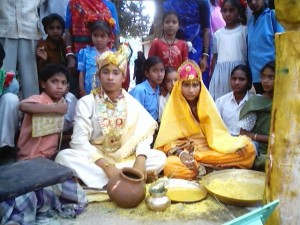 “Arranged Marriage” was known everywhere and along the history. It was practiced in all social levels; Kings to form political alliances, and Peasants to increase hand-power. This type usually takes one of two forms; either though a Matchmaker or between the elders of two close-families, where both Bride and Groom has little to influence the consent. The practice dominates the Indian subcontinent in particular. It is the contrary to “Love Marriage” which is fast-growing phenomenon among new generations. Among conservative communities of Africa and Arabia, the same is practiced and well accepted; as open communications among sexes are often limited.
Today; the practice of Arranged-Marriage is commonly known among the Pakistanis in their British Diaspora; which is considered as a back-door opportunity for immigration. British and American citizens of Indian-Subcontinent origins are mostly forced-by-families to exercise the Arranged Marriages. In the last couple of years, both public and government concerns were built up to confront the tragedies and legal consequences of increased divorce or annulment resulted from failed Arranged Marriages.
 Arranged-Marriage is usually practiced in “Bi-Racial “or “Inter-Racial” forms, which respectively represent political down to economic reasons. The negative impact; particularly in the rural areas; is the widespread of “Child-Marriage” which is banned by most governments.
The praised form of Forced-Marriage is practiced in many parts of the world; which generally meant to legitimize the birth of an out-of-wedlock pregnancy; by forcing the subject couple to officially marry. In the new world, it was called a “Gun-Shot-Marriage”; as the groom is forced to formally wed his accessory-female under threat of guns. If the male participant of such pregnancy was not identified or escaped, many families particularly in traditional communities in Africa, Asia and Middle East exercise the “Honor-Killing” on the female participant. The Japanese practice the “Gun-Shot-Marriage”, but without such typical violence; but in a humorous manner..!!
“Compensation Marriage” stills in practice in some rural areas in parts of Africa and Asia. Usually; it is meant to resolve fraud or tribal issues; where the young girls are given away as Brides, against some financial debts or social burdens. The Brides are sometimes as young as 10 years old, which raises the concerns and opposition. This practice is well known in Tribal-Controlled areas in Afghanistan, Pakistan, Sahel of Sub-Saharan Africa, and Western China. Lately, a 9 years old Yemeni girl was the media focus in her case that was annulled by court due to public campaign.
It is called “Rehabilitation Marriage”, when the consensually abducted bride would consent marriage to her abductor or perpetrator. This was commonly known in conservative Italian Sicily, among teenagers in particular, as a way to impose their discretion on their families though false abductions. There is no doubt that such type is an option in all conservative communities; which became on the cultural edge between their restricted heritage and modern urbanism.
Islamic views on Forced Marriage can be summarized in:
 Marriage is always a scared institution and guarded by various roles and obligations. Among all ceremonies in Humane Culture; only Marriage and Death have the most concern and focus of social, legal and political structures. This is a worldly phenomenon; regardless of monotheism, polytheism or atheism beliefs. Simply, they both mark beginning and end of life. Therefore, Religions had set many guidelines on marriage processing, and maintained by ruling the details. Breeding is a main purpose of marriage; which had drawn the parameters on authority, conformity and obligations.
Generally, all ancient nations have great appreciation of the intact virginity of girls and unmarried females. It is a typical implementation of anti-adultery parameters that are usually preached by most religions and codes of ethics. For practical reasons, these parameters are easy to impose on females rather than males. Inevitably; this male-advantage has cracked the societies for centuries; creating most social indecencies, psychological disorders and naughty practices. The Western-Hemisphere’s trends of pragmatism, individualism and personal independence had encouraged the young generations in the orient to downgrade the virginity concept, which is notably cheered by young males as a modern urbanism. Media and public steering are not only short to confront the trend; but also preach for it in various yet covert venues..!!
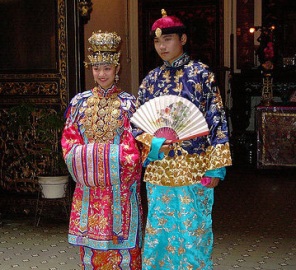 Typically; Muslim-females are mostly grown up in conservative societies; with great concern on their virginity. Subsequently; they have learned to hold their sexuality till getting married. On the contrary and in violation of Islamic code of ethics; Muslim-males are lift with discretion ruled by their religious up-holding. Such imbalance is the concern of all Muslim social workers. The paradoxical concepts that widely practiced among Muslims are influenced by the indigenous populations who constituted the majority of early believers in Middle East and Central Asia. Islamic gender culture did not permit any sexual freedom for males, and discourage any indecent practices. Nevertheless, Islam always affirms that both sexes are obliged to maintain non-adultery till getting married.
Early Islam had advised its followers to avoid the bi-racial marriages that discrete cousins, or relatives; recommending both interethnic and intercultural marriages. Later it is scientifically confirmed the health vulnerability and genetic disorder of bi-racial marriages. Notably, the early adherence to such guidelines had enabled the expansion of the Muslim-State and the spread of the religion as well. Nevertheless, the early Muslims were more comprehensively Muslims, as fresh and enthusiastic to the philosophy and implementations of Islam.
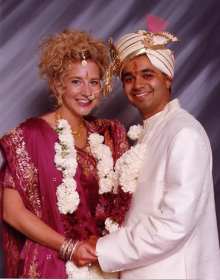 Islam had set framework for social conduction that secures the community to orderly function, and enable the individuals to seize fair opportunities to prosperity and comfort. The backbone of the Islamic belief is only served when believers are free from suppression, distortion or disarray. In other words; setting the people are free from any emotional or psychological stresses that would allow the evil domination on their well and intensions. Typically, the complex instincts and desires associated with marriage envelope, are the most serious to affect both primary and accumulated behaviors. Therefore, Marriage has to be in a positive form that adds value to both living and religious contentedness.
Accordingly, it is clear that Islam supports all forms of marriage that are broadly soft, peaceful and cheered, rather than those would leave emotional hurts in any form:
Both Bride and Groom have full freedom to accept or reject proposals. Families and elders are supposedly to elaborate the matching and advise the consensual consent. Muslims are advised to seek earlier marriage, which is proven healthier, and requires close support and incubation.
Arranged Marriage is acceptable subject to the free will of both Bride and Groom. This reads the interests of families, and enables success; if associated with fair assessment and consent.
Despite the fact that early Arabs had known and practiced the early-puberty or adolescence marriage, it is not compulsory as related to levels of socio-cultural set-up and psychological readiness. The fact that many Muslims practice the same. cannot be used to condemn Islam for the same. Muslims were clearly guided to adapt their living practices as per their timely knowledge and suitability.
A common Islamic ruling tells that Forced Marriage or forged consent of Marriage, if proven; imminently annuls the marriage, and prosecute who conspire for it.
Abduction in peace time is an act of “Hirabah”, which means piracy or act of unlawful warfare; is the most punishable crime in Islam. The judge would choose one of four sever sentences: execution, crucifixion, limbs amputation or exile. These extreme punishments were meant to abort the perpetration; which is evilly inspired.
Compensation Marriage is Slavery if committed to an under-aged female, or Forced Marriage if committed to an adult. Slavery is not cheered for Muslims to practice, and prohibited if done to a Muslim by another Muslim.
Both Gun-shot and Rehabilitation Marriages are deemed to be social reconciliation apart from the punishment on unlawful consensual act between the couple.
 Early Muslims were familiar with “Love Marriage”, which was mostly triggered by males who happened to feel the chemistry towards a particular female. Certainly; circumstances that would lead to such a meeting event, are various and shall always be within the Islamic code of ethics. Also, a Guardian or Wali would approach a chosen male to propose his daughters for marriage; subject to an arranged occasion in presence of family, enabling the couples to sense the needful chemistry. Affirming the existence of such personal appeal or chemistry was guidance to process marriage.
Many wrongdoings are committed in the name of Islam, due to poverty, illiteracy and backwardness spreading among most of Muslim communities. This should not be examined as true interpretation of the religion. Islam is based on sophisticated logic and respect of intellectual and emotional integrity of the believers. However, a commonly repeated phenomenon in all underdeveloped nations; that paradoxes and controversies are ruling. Educated Muslim elites have a great mission to transmit the True Islam to their natives, and preach for the adequate lawfulness. No righteous act can be performed without a referral; therefore, the dilemma among Muslims is either an absence of reliable and visionary religious leaders or a hesitant intelligentsia due to the mightiness of religious institutions and their mighty power of Inquisition..!!


 Generally, slavery was defined in four groups; war captives, forced labor, merchandized, and by born. Emancipation was usually driven by civic rulings, religious abolition or terms of emancipation. War captivity was the principle slavery resource; which was permanent or temporarily, based on conditions of emancipation. Both sex slavery and debt slavery are sub-groups of forced labor, which sometimes being initiated by a person to be enslaved or by his family-bread provider. While slave trade was formal business in most of the history, by born slavery varies as per cultural or religious attributes.

.jfif)


